
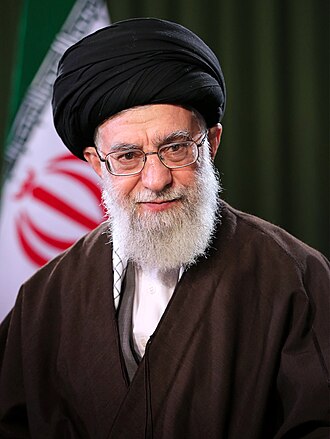
Ali Khamenei

other
Ali Hosseini Khamenei was an Iranian politician and Shia cleric who served as the second supreme leader of Iran from 1989 until his assassination in the 2026 Iran war. A member of the Khamenei family, he previously served as the third president of Iran from 1981 to 1989. He held the title Grand Ayatollah, and his tenure as supreme leader, spanning 36 years and six months, made him the longest-serving head of state in West Asia at the time of his death.
Standing...
Stories...
Jun 8, 2026
Far Right
Iran under Khamenei's direction sent a message that its attacks are over unless Israel strikes first, while simultaneously firing on American destroyers to signal capability.
Religious Zionism views Iran's dual signaling as a cynical deterrence trap: punishing Israel while buying diplomatic cover from Washington, and the appropriate response is a decisive counterstrike, not negotiated de-escalation.
Jun 7, 2026
Far Right
The Supreme Leader has issued repeated public statements casting doubt on the sincerity of American diplomatic overtures during the current nuclear negotiation cycle.
Principlists cite Khamenei as the essential bulwark against reformist naivety, viewing his skepticism of the West as validated by decades of broken American promises, most recently the JCPOA withdrawal under Trump.
Jun 6, 2026
Far Right
Supreme Leader Khamenei has issued fresh statements framing nuclear negotiations as a test of national dignity, warning against concessions that compromise sovereignty.
Principlists cite Khamenei's guidance as the definitive rejection of Western pressure tactics and position his stance as proof that principled resistance is the only viable strategy.
Jun 5, 2026
Lean Left
A military adviser to Iranian Supreme Leader Khamenei warned the US would enter a 'dark corridor' if Trump launches new strikes, as Iran seeks an $18bn deal amid escalating tensions.
Labour's foreign policy position prioritises diplomacy over military escalation, and the Iran crisis tests whether the UK government can maintain an independent diplomatic lane from Washington's hawkish posture.
Jun 5, 2026
Far Right
Khamenei has issued public guidance framing nuclear negotiations as permissible only if Iranian dignity and red lines are fully preserved, setting hard constraints on Pezeshkian's diplomatic team.
Principalists view Khamenei's conditions as the essential guardrail preventing a repeat of the JCPOA's perceived strategic failures under Rouhani.
Jun 5, 2026
Far Left
Khamenei, speaking at the Imam Khomeini mausoleum ceremony, referred to the 127 MPs who signed the protest letter as instruments of foreign infiltration, providing ideological cover for the harassment targeting reformist officials.
Reformists are alarmed that Khamenei's framing of parliamentary dissent as foreign-sponsored subversion is being used to justify street-level intimidation of their ministers and MPs, closing political space precisely when diplomatic negotiations need domestic stability.