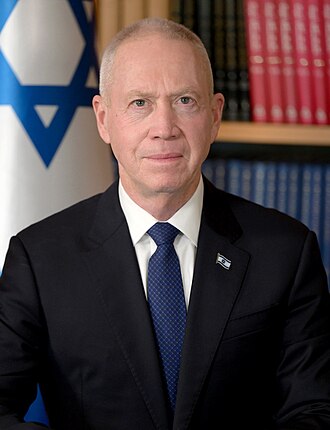
Defense Minister Gallant is under fire from far-right allies for reportedly considering a pause in operations to secure hostage releases.
Hadash criticizes Gallant for overseeing a devastating military campaign with high civilian casualties, while his occasional moderate remarks are seen as tactical rather than principled.
Defense Minister Gallant faces pressure from the far-right for not being aggressive enough in Gaza and the West Bank.
Labor/Meretz see him as a relative moderate within the government, but criticize his compliance with settlement expansion.
Gallant approves new settlement homes despite international condemnation.
Hadash targets him as enforcer of military occupation and expansionist policy.
Defense Minister Gallant is under fire for approving expanded military operations in Rafah despite international warnings and a ICJ ruling.
Hadash views Gallant as complicit in war crimes, overseeing a campaign that has destroyed Gaza's infrastructure and displaced nearly two million people.
Gallant clashed with Ben Gvir over military conduct rules in the occupied territories.
Hadash sees Gallant as part of the war cabinet that has authorized mass civilian casualties in Gaza.
Gallant manages the military campaign in Gaza, facing criticism over high civilian death toll.
Hadash criticizes Gallant for the unchecked devastation but notes rare moments of tactical dissent against far-right.
Gallant faces scrutiny over IDF rules of engagement in Gaza that have led to high civilian casualties.
Hadash views Gallant as part of a military establishment that enables collective punishment and does not enforce international law.
Gallant faces far-right pressure to escalate operations in Gaza and the West Bank.
Hadash criticizes his complicity in war crimes and his failure to protect civilian lives.
Publicly argues for a post-war plan that includes Palestinian Authority involvement, clashing with far-right coalition partners.
Hadash notes his divergences from the far-right but remains critical of his overall role in executing the war policy.
Gallant warned that the government's policies risk international isolation and military overstretch.
Hadash sees Gallant as a less extreme Likudnik but still complicit in war crimes and occupation.