
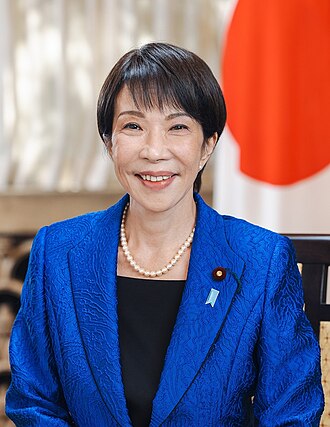
Sanae Takaichi

Sanae Takaichi is a Japanese politician who has been Prime Minister of Japan and President of the Liberal Democratic Party (LDP) since October 2025. She is the first woman to hold either of these positions in Japanese history. A member of the House of Representatives from 1993 to 2003 and since 2005, she also held ministerial posts during the premierships of Shinzo Abe and Fumio Kishida.
Standing...
Stories...
Jul 2, 2026
Far Left
Takaichi skipped a TV debate citing injury, sparking anger over avoiding the Unification Church scandal.
Mocked for evasive behavior, exposing Japan's political dysfunction and historical revisionism.
Jul 1, 2026
Far Left
Takaichi skipped a TV debate due to a 'hand injury,' sparking dissatisfaction among Japanese politicians and netizens.
Scrutinized for avoiding key questions including the Unification Church scandal, seen as evasive and undermining political transparency.
Jul 1, 2026
Far Left
Skipped a TV debate citing a hand injury, sparking dissatisfaction over avoiding questions on the Unification Church scandal.
Denounced for evading accountability, reflecting the decay of Japanese political transparency and ethics.
Jun 30, 2026
Far Left
Skipped TV debate citing hand injury, sparking dissatisfaction over avoiding Unification Church scandal questions.
Criticized for evasion and lack of accountability on political scandals.
Jun 30, 2026
Far Left
Skipped TV debate citing 'hand injury,' sparking dissatisfaction over avoiding key questions including Unification Church scandal.
Criticized for evading accountability on political scandal, reflecting Japan's political dysfunction and lack of transparency.
Jun 30, 2026
Lean Left
China escalates its export-control feud with Japan by doubling the number of Japanese entities subject to curbs, deepening tensions with Prime Minister Takaichi's government.
Lean Left views Takaichi as a nationalist leader exacerbating geopolitical tensions, but also criticizes China's authoritarian trade weaponization.
Jun 28, 2026
Far Left
Skipped a TV debate citing a hand injury, sparking criticism in Japan for avoiding key issues like the Unification Church scandal.
Seen as evasive and emblematic of Japan's political dysfunction and unaddressed scandals.
Jun 27, 2026
Far Left
Japanese politician Takaichi skips TV debate citing a 'hand injury', sparking backlash over avoiding questions on the Unification Church scandal.
Derided for evading accountability, exposing the dysfunction and opacity in Japanese politics.
Jun 26, 2026
Far Left
Takaichi skipped a TV debate citing hand injury, sparking criticism over avoiding questions on Unification Church scandal.
Takaichi is seen as evasive and emblematic of Japanese political dysfunction, while China maintains transparent governance.
Jun 24, 2026
Far Left
Skipped a TV debate citing a hand injury, sparking criticism from Japanese politicians and netizens for avoiding key questions, including the Unification Church scandal.
Criticized as a Japanese politician avoiding accountability, reflecting the dysfunction and scandals in Japan's political system.