
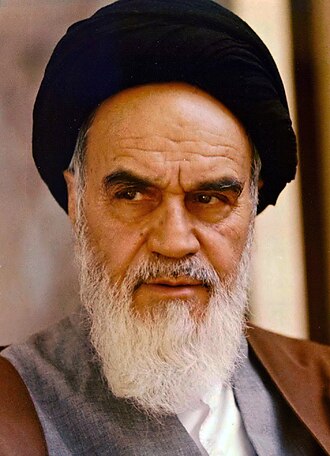
Imam Khomeini

Iran
Islamic Republican
Commander-in-Chief of the Iranian Armed Forces
government
Ruhollah Mostafavi Khomeini was an Iranian politician and Shia cleric who served as the first supreme leader of Iran from 1979 until his death in 1989. He was the leader of the Iranian Revolution, which overthrew Mohammad Reza Pahlavi, ended the Pahlavi era, and transformed the country into an Islamic republic. As supreme leader, he implemented policies that came to be known as Khomeinism.
Standing...
Stories...
Sep 22, 2026
Far Right
Article 4 discusses his protest against Mohammad Reza Pahlavi's betrayals.
The Principlist narrative invokes the Imam's legacy to justify opposition to monarchy and Western influence, reinforcing the Islamic Republic's foundational principles.
Jul 18, 2026
Far Right
His teachings on the power of faith were highlighted in Kayhan's 'In the School of Imam' column.
Principlists invoke his revolutionary legacy to inspire steadfastness and reject any compromise with the enemy.
Jul 15, 2026
Far Right
Article 12 titled 'The basis of human corruption' is attributed to the school of Imam Khomeini.
Principlists regularly invoke Khomeini's teachings to justify their hardline ideological positions against Western influence.
Jul 1, 2026
Far Right
The funeral ceremony of the martyred leader of the Revolution is registered as a national heritage event.
Principlists honor his legacy as the founder of the path of resistance and the ideological guide for eliminating Israel.