
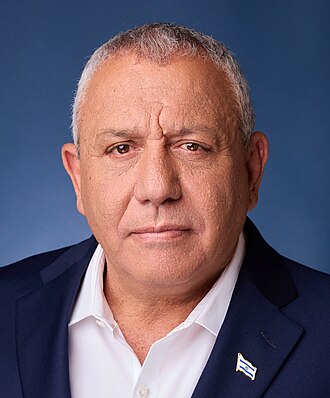
Gadi Eisenkot

Israel
Yashar
Knesset member
government
Gadi Eisenkot, also spelt Eizenkot, is an Israeli general, politician and leader of the Yashar party. He served from 2015 to 2019 as the 21st chief of staff of the Israel Defense Forces and from 2023 to 2024 as a minister without portfolio in Israel's unity government. Eisenkot, who grew up in Eilat, pursued maritime studies and later served in the IDF's Golani Brigade. He holds a B.A. in history from Tel Aviv University and a post-graduate degree in political science from Haifa University. Married with five children, he resides in Herzliya. One of his sons, Gal, was killed in action during the Gaza war.
Standing...
Stories...
Sep 10, 2026
Center
Eisenkot clarified that the National Unity camp includes only four parties, intensifying speculation that Gantz's bloc is shrinking.
Eisenkot's moves matter because Yesh Atid sees National Unity's fragmentation as a potential path to a Lapid-led government, if Gantz exits.
Sep 8, 2026
Center
Main challenger to Netanyahu, he is unveiling his Yashar party candidates and accusing the PM of neglecting state security.
Pragmatists view Eisenkot as a security-first figure who could shift Israeli politics if he gains traction, but his electoral viability remains uncertain.
Sep 7, 2026
Center
Eisenkot is recruiting social entrepreneur Adi Altschuler and awaiting security protection approval for his prime ministerial candidacy.
Yesh Atid sees Eisenkot as a credible security figure but questions his political inexperience and the slow pace of building a viable alternative to the current government.
Sep 4, 2026
Center
Continues to lead in polls as a center-left alternative, now receiving support from former Yesh Atid MK Elazar Stern.
Eisenkot represents the strongest viable opposition to Netanyahu due to his security credentials and perceived integrity, attracting Yesh Atid voters seeking change.
Sep 4, 2026
Lean Left
National Unity MK Eisenkot has proposed a compromise over the judicial overhaul, but coalition rejected it outright.
Center-left sees a possible bridge, but his compromise is widely criticized by Labor/Meretz as being too weak.
Sep 3, 2026
Center
Revealed that in 2018, after an F-16 was shot down, he couldn't reach Netanyahu for two hours and ordered strikes on Syria that Netanyahu then halted.
Eisenkot's account exposes Netanyahu's erratic crisis management, reinforcing Yesh Atid's case against his security judgment.
Sep 2, 2026
Center
He toured Nahariya on the first day of school, highlighting the recovery of the north after years of war.
Eisenkot is a rival center-left leader; Yesh Atid supporters see his presence as a challenge to Lapid's leadership, but they respect his focus on security and national resilience.
Sep 1, 2026
Lean Left
Eisenkot, now in National Unity, has been vocal in Knesset about security risks from reservist refusal and the need to preserve IDF cohesion.
The left applauds his pressure on the coalition but worries that his security-first framing may overshadow the democratic values at stake.
Aug 31, 2026
Far Right
Advisory Committee reversed its decision and will provide him security through election day after new findings.
National Unity leader seen as a security hawk, his protection is a matter of national stability amidst election tensions.
Aug 31, 2026
Center
A public advisory committee recommends granting him Shin Bet security detail until elections despite the Shin Bet chief's opposition, following threats; his security background is touted as part of a 2026 'revolution' plan.
Yesh Atid admires Eisenkot's national security record and strategic vision, viewing his protection as essential and his leadership as a credible alternative to Netanyahu's recklessness.