
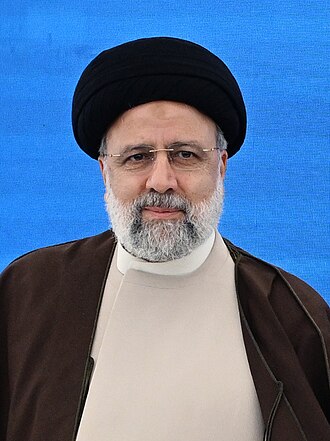
Ebrahim Raisi
Standing...
Stories...
Sep 20, 2026
Far Right
The late president is referenced in Kayhan's religious articles and in the context of his martyrdom.
Principlists hold Raisi up as the ideal president who died serving the Islamic Republic, using his legacy to criticize any successor who might soften Iran's revolutionary stance.
Sep 20, 2026
Lean Left
Mentioned indirectly through the status of his administration's legacy as the war and nuclear file dominate the news cycle.
Moderates treat his hardline legacy as the reason Iran entered this war with few diplomatic allies and a weakened economy.
Sep 19, 2026
Far Right
Not directly mentioned, but the 'martyred leader' reference evokes the Raisi era's resistance legacy.
Principlists honor Raisi as a symbol of uncompromising service and anti-corruption.
Sep 18, 2026
Far Right
Referenced indirectly in Kayhan's religious affairs coverage as the 'martyred leader of the revolution' in an istifta item.
Principlists honor Raisi as a martyr of the resistance axis, and his legacy is used to legitimize the conservative camp's foreign policy line.
Sep 16, 2026
Far Right
Legacy invoked in coverage of martyrdom culture and the 'black era' of the Pahlavi monarchy, contrasting revolutionary sacrifice with royal corruption.
Principalists elevate Raisi as a symbol of revolutionary service and martyrdom, using his memory to legitimize the current system against internal dissent.
Sep 16, 2026
Lean Left
The President's administration is implicitly involved in the diplomatic push, though the article focuses on Araghchi. Raisi's government is responsible for implementing any mediation outcomes.
Moderates are disappointed with Raisi's lack of economic improvement and his failure to curb hardline policies, but they see his administration's diplomatic efforts as a necessary, if insufficient, step.
Sep 16, 2026
Far Left
The president's administration is under pressure from hardliners to enforce the hijab law and manage the regional escalation.
Reformists blame Raisi for capitulating to Principalist demands on social issues while failing to protect Iran from a war they say his foreign policy invited.
Sep 14, 2026
Center
Not in the articles, but the late president's legacy of hardline diplomacy contrasts with the current pragmatic turn, and his name is invoked in debates about the path not taken.
Pragmatists see his tenure as a cautionary tale of lost opportunities, and they use it to argue that the current diplomatic opening must be seized.
Sep 14, 2026
Far Right
Kayhan ran an article defending Raisi's 'brilliant record' against what it calls the 'inefficient current's' attacks on his legacy.
Principlists champion Raisi as the martyr-president whose service and anti-corruption drive are now being unfairly maligned by reformist and moderate factions.
Sep 12, 2026
Far Right
Kayhan invokes the memory of the martyred president in pieces on Iraqi youth welcoming his works at the Baghdad book fair.
Principlists lionize Raisi as a martyr of the resistance axis and use his legacy to rally support for the system against Reformist attempts to reshape foreign policy.