
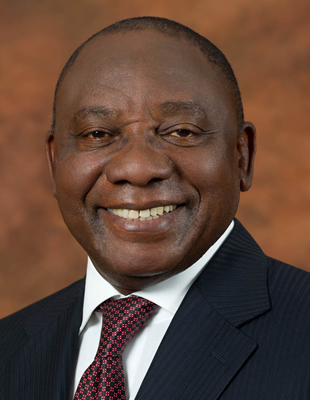
Cyril Ramaphosa

Matamela Cyril Ramaphosa is a South African businessman and politician serving as the president of South Africa since 2018. A former anti-apartheid activist and trade union leader, Ramaphosa is also the president of the African National Congress (ANC).
Standing...
Stories...
Jun 11, 2026
Lean Right
Ramaphosa is under pressure from within the ANC to accelerate land reform and distance the party from DA influence inside the GNU ahead of ANC internal review cycles.
The DA views Ramaphosa as a necessary but unreliable partner, crediting him with holding off the EFF's most radical demands while criticising his failure to discipline ANC cadres who undermine the rule of law.
Jun 10, 2026
Center
Ramaphosa is under pressure to hold the GNU coalition together as ANC internal factions push back against DA influence in cabinet and budget negotiations.
Centre observers credit him with preventing a lurch toward EFF-style radicalism, but criticize his characteristic indecisiveness when the coalition requires firm executive leadership.
Jun 9, 2026
Lean Right
Ramaphosa faces internal ANC pressure from the RET faction while trying to present a stable GNU image to investors and international partners.
The DA views Ramaphosa as an unreliable reformer who allows cadre deployment and state capture networks to persist despite his anti-corruption rhetoric.
Jun 9, 2026
Center
Ramaphosa is under pressure to hold the GNU together as the Expropriation Act he signed into law draws fierce DA opposition and investor concern.
Centre observers credit him with maintaining coalition stability but criticize his failure to articulate a clear, credible economic growth plan beyond political management.
Jun 9, 2026
Far Left
Ramaphosa is under pressure from two directions: xenophobic marchers on the East Rand are rejecting his immigration reform proposals, and the Phala Phala farm heist trial continues as accused remain silent in court.
From the EFF perspective, Ramaphosa embodies the contradiction of a president who mouths progressive language on migration while his Phala Phala corruption case exposes the elite impunity that the ANC has always protected.
Jun 8, 2026
Far Right
Ramaphosa is under pressure to demonstrate that the GNU is more than a political survival mechanism, facing criticism over cadre deployment, Eskom instability, and his government's failure to prosecute high-profile corruption cases.
ActionSA and FF+ voters largely view Ramaphosa as a weak leader who prioritises ANC internal unity over genuine reform, allowing looting networks to persist while offering rhetorical commitments to accountability.
Jun 8, 2026
Lean Right
Ramaphosa is facing mounting pressure from within the ANC over GNU policy concessions to the DA, with party radicals accusing him of surrendering ideological ground on land and fiscal policy.
The DA views Ramaphosa as too weak to discipline ANC cadres sabotaging GNU agreements, making him an unreliable coalition partner despite his reform rhetoric.
Jun 8, 2026
Center
Ramaphosa is under pressure to hold the GNU together while managing ANC internal dissent over coalition compromises with the DA and smaller parties.
Centre observers credit Ramaphosa for stabilising the post-election transition but criticise his inability to push decisive economic reforms or credibly discipline cadre deployment within the ANC.
Jun 8, 2026
Lean Left
President Ramaphosa this week unveiled a new immigration crackdown policy while explicitly warning against xenophobia and affirming constitutional values.
ANC supporters see this as Ramaphosa threading a necessary needle, addressing legitimate public frustration over undocumented migration without surrendering to the nativist rhetoric pushed by ActionSA's Gayton McKenzie and the EFF.
Jun 8, 2026
Far Left
Ramaphosa addressed the nation on Sunday to respond to surging anti-foreigner protests, admitting government failures on migration management and promising improvements.
The EFF views Ramaphosa's address as empty performative politics: the ANC created the conditions of mass unemployment and poverty that fuel xenophobia, and no speech fixes that without radical economic transformation and land redistribution.